A simple guide to preventing falls, and knowing what to do if you fall
For our clients and their families
A fall can happen to anyone.
Not every fall can be prevented. But small changes can lower your risk, and help you feel more confident at home.
01. START HERE
Falls: what you need to know
Falls are common as we get older, but a fall is not simply “part of getting older”. There are
many things you can do to reduce your risk.
This guide will help you:
1
Prevent
Make your home and daily routine safer
2
Stay Strong
Build strength and balance
3
Be Ready
Know what to do if you fall
4
Get Help
Know when to call 112 / 999
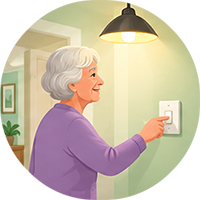
Good Lighting
in every room and hallway
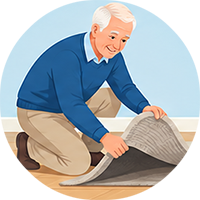
Secure loose rugs
or remove trip hazards
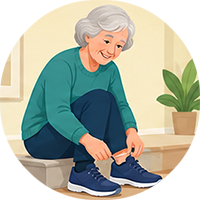
Wear supportive shoes
with a good grip, indoors too
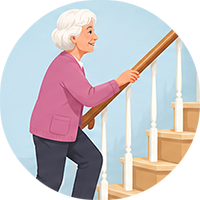
Handrails on stairs
use them every time
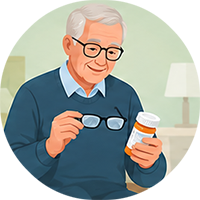
Keep glasses clean
and a prescription up to date
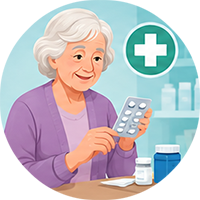
Review medicines
with your GP or pharmacist
Remember
If you have a fall, please tell someone. Even if you feel well afterwards, it is important to let your GP or PHN (public health nurse) know. They can help identify why the fall may have happened and whether anything can be changed to reduce the risk of another fall.
02. PREVENTING FALLS
Make your home safer
Simple checks can make a big difference:
Keep floors, hallways and stairs free from clutter.
Remove loose rugs, or secure them properly.
Use good lighting, especially on stairs and during the night.
Wear well-fitting shoes with a good grip. Avoid walking in socks.
Use handrails on stairs and grab rails where recommended.
Keep your walking aid, phone and personal alarm within easy reach.
Clean up spills straight away.
Keep frequently used items between waist and shoulder height where possible.
Take your time when standing up. Sit on the edge of the bed or chair for a moment before standing, particularly if you sometimes feel dizzy or light-headed.
Bathroom tip
A non-slip shower or bath surface, and suitable grab rails, can reduce the risk of slipping. Ask your GP or PHN about the right equipment for you.
03. STAYING ACTIVE
Keep moving, stay confident
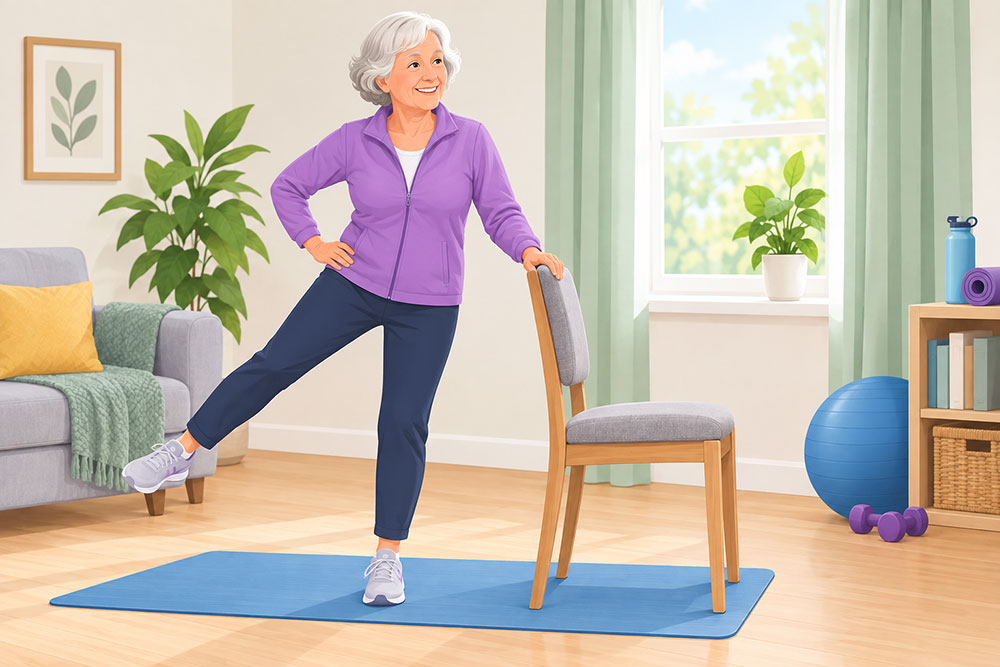
Keeping active can help maintain your strength, balance and confidence.
Try to stay as active as you safely can. Your GP, physiotherapist or PHN can advise you about exercises that are suitable for you.
Indoor exercises for older people (HSE)
Scan the QR code, or visit the link below, for HSE balance, strength and sitting
exercises for older adults.
Always use a sturdy chair or counter for support, and start slowly. Stop straight away if you feel pain, dizziness, chest discomfort, or unwell.
04. KNOW YOUR RISK
Medicines, eyesight & your health
Some medicines can make you feel sleepy, dizzy or unsteady, which may increase your risk of falling. This can include some medicines for sleep, anxiety, pain, blood pressure, mood, allergies or diabetes.
Do not stop taking any medicine yourself. If you feel dizzy, sleepy or less steady after starting or changing a medicine, speak to your GP or pharmacist.
Speak to your GP or pharmacist if…
You feel dizzy, faint or unsteady.
You have started a new medicine and feel less steady.
You take several different medicines.
You have had a fall since your last medication review.
Other things that help
Have your eyesight checked regularly.
Tell your GP or PHN if you feel dizzy when you stand up.
Keep well hydrated and eat regularly.
Tell your GP or PHN about any fall, even if you feel fine afterwards.
05. YOUR STEP-BY-STEP PLAN
If you fall and you are alone
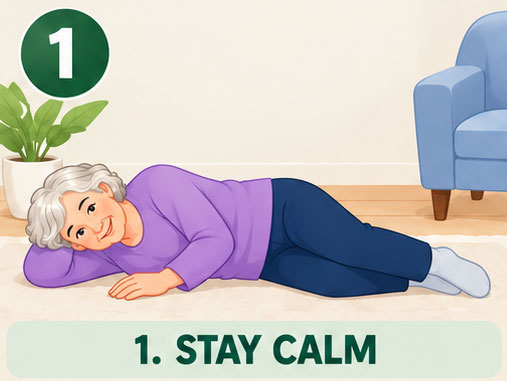
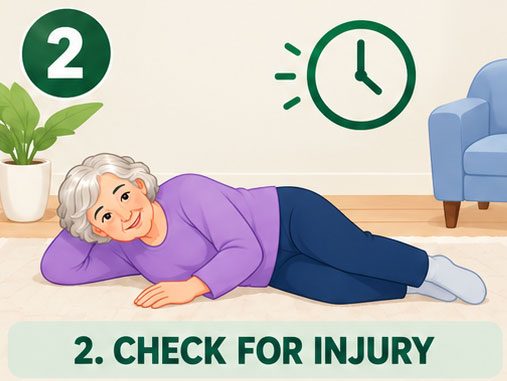
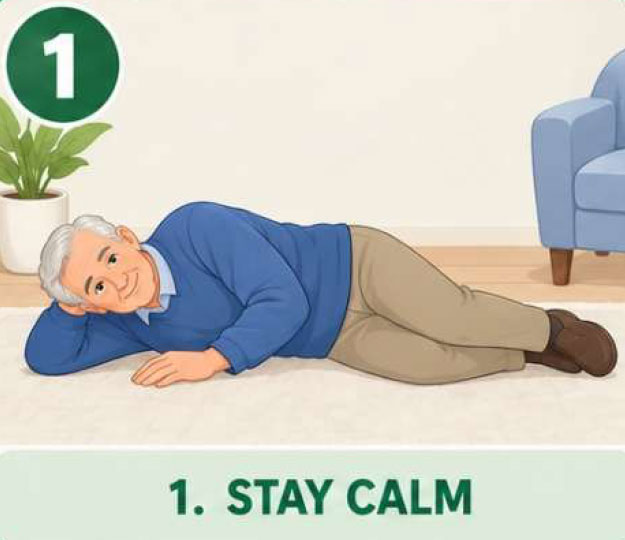
First: stay calm. Take a moment to check yourself. Do not rush to get up.
Most falls do not cause serious injury.
Take your time. The next two pages tell you exactly what to do next, whether or not you can get up on your own.
06. GET HELP
If you cannot get up
1
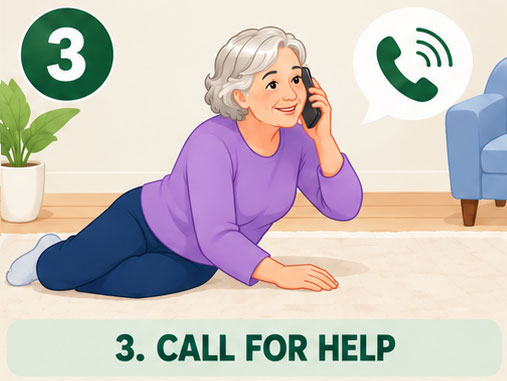
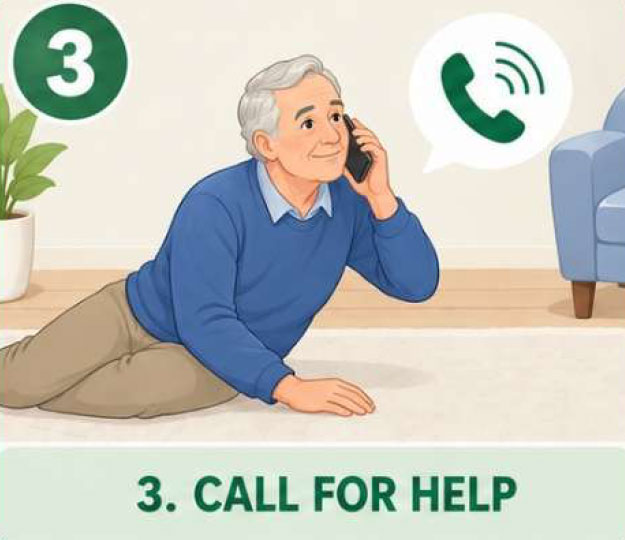
Press
Use your personal alarm or phone if you can
reach it.
2
Call
If you cannot reach it, shout or bang on the wall/floor.
3
Keep Warm
Pull a blanket, coat or cushion towards you if you can.
4
Keep Moving
Gently move your arms
and legs, or change
position if you can.
CALL 112 OR 999 FOR AN AMBULANCE
if you have severe pain, may have injured your head, back, neck or hip, cannot get up, or you are not sure it is safe to move.
Important
Do not try to lift yourself by pulling on a walking frame or an unstable piece of furniture. Wait for help if you are injured or cannot safely get up.
07. ONLY IF YOU ARE NOT INJURED
How to get up safely
ONLY TRY TO GET UP IF YOU ARE NOT INJURED AND FEEL SAFE TO
DO SO
If you are unsure whether you are injured, do not try to get up. Call for help and wait where you are.
If you are not hurt and feel able to get up, take your time. Practise this method with a family
member or PHN when you are well.
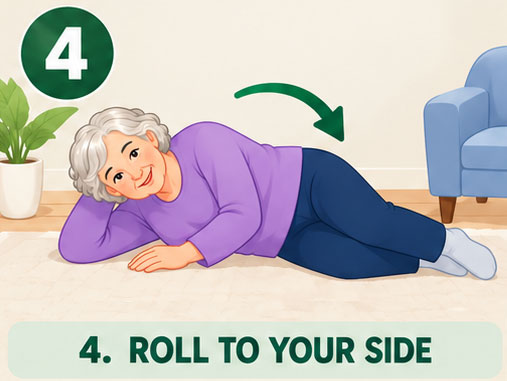
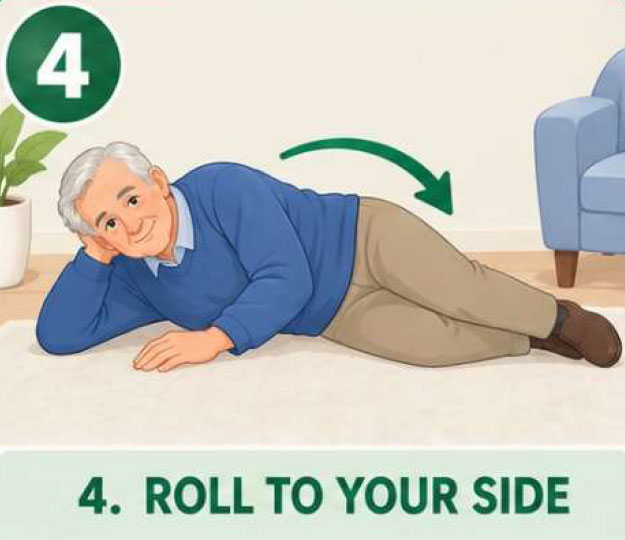
1
Roll onto your side.
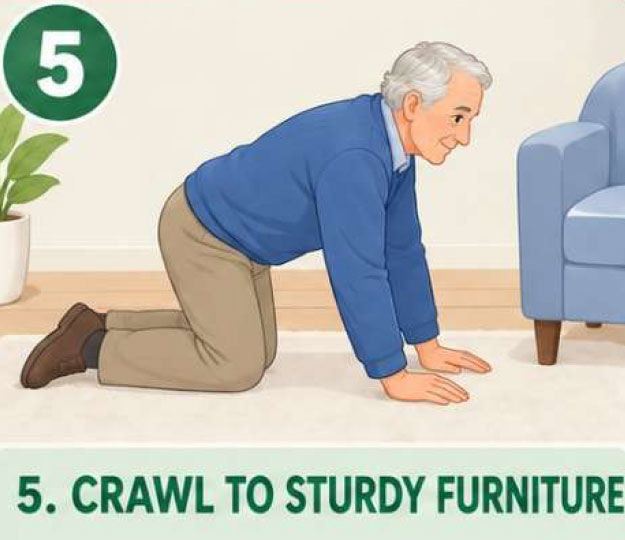
2
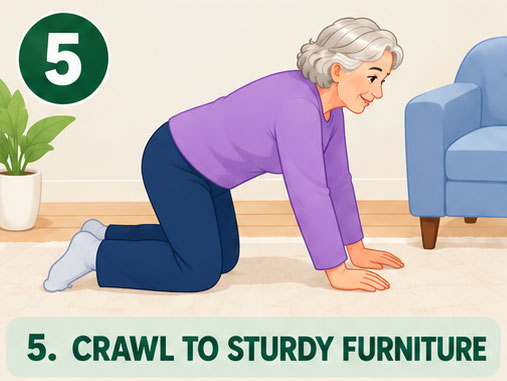
Push yourself onto your hands and knees.
3
Move to a sturdy chair or other stable support.
4
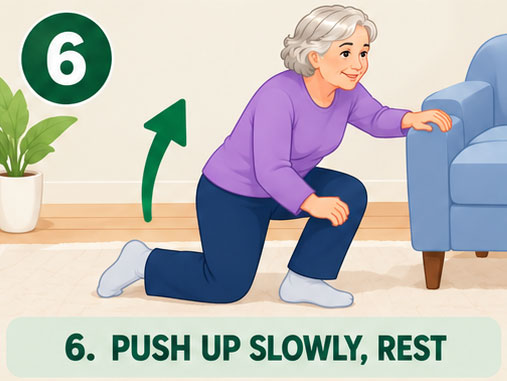
Put your stronger foot flat on the floor.
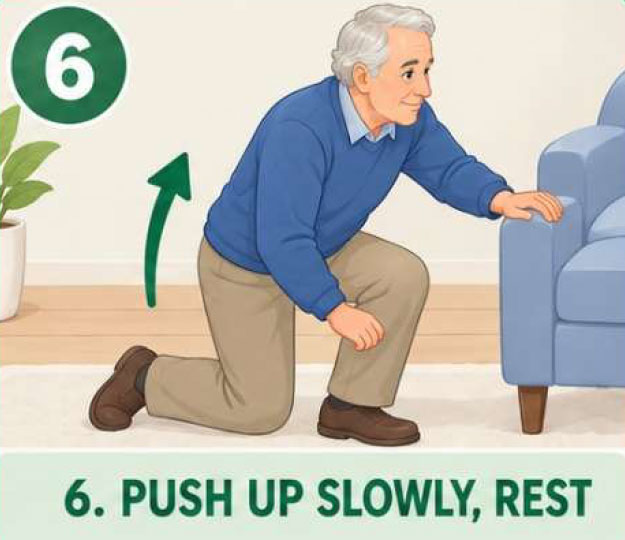
5
Push up slowly using your arms and leg.
6
Turn around and sit down. Rest.
After you get up
Sit and rest for a few minutes. Tell someone you have fallen and how you feel. Let your GP or PHN know about the fall.
08. BE READY
Personal alarms & fall alerts
A personal alarm can let you call for help with one button. Some devices can also detect certain types of falls automatically. No automatic fall detector can detect every fall, so the manual alarm button is still important.
What to look for:
A pendant or wrist-worn button you can reach after a fall.
Waterproof equipment if you want to wear it in the shower or bath.
24/7 monitoring if you want a response centre to answer your alarm.
Fall detection if recommended for you – but remember it may not detect every fall.
A service that fits your home, mobile signal and support network.
Seniors Alert Scheme - possible government support
The Seniors Alert Scheme supports eligible people aged 65+ with personal monitored alarms. Eligibility and funding arrangements can change, so check the current scheme and apply through an approved local community/voluntary organisation.
Other personal alarm services are also available privately. Your family, GP, PHN or care coordinator may be able to help you explore suitable options.
Personal alarm suppliers in Ireland
TASK Community Care
What they offer Pendant alarms, telecare & 24/7 monitoring. Official Seniors Alert Scheme provider since 1974.
Contact Details Unit 1, Block 3, City North Business Park, Stamullen, Co. Meath. Tel: 01 843 5889 Web: taskltd.com
Radius Connect24
What they offer Not-for-profit personal alarm & telecare service. Northern Ireland and Republic of Ireland.
Contact Details Suite E, Ashtown Business Centre, Navan Road, Dublin D15 K6WR. Tel: 01 670 4114 Web: radiusconnect24.com
LifeConnect24
What they offer Pendant alarms with 24/7 TSA-accredited monitored response. Formerly Lifeline24.
These three are given as examples of established providers in Ireland, not a recommendation or endorsement of one over another. Details correct at time of writing – please confirm current pricing, eligibility and terms directly with the provider, or ask your coordinator for the latest guidance.
09. WHAT YOU CAN EXPECT
If you fall while your carer is with you
If you fall while your carer is with you, they will first make sure you are safe and check whether you may be injured. They will not attempt to lift you from the floor if doing so could put you or them at risk. They will follow your care plan and our falls-response procedure and arrange appropriate help where needed.
Stay with you and reassure you.
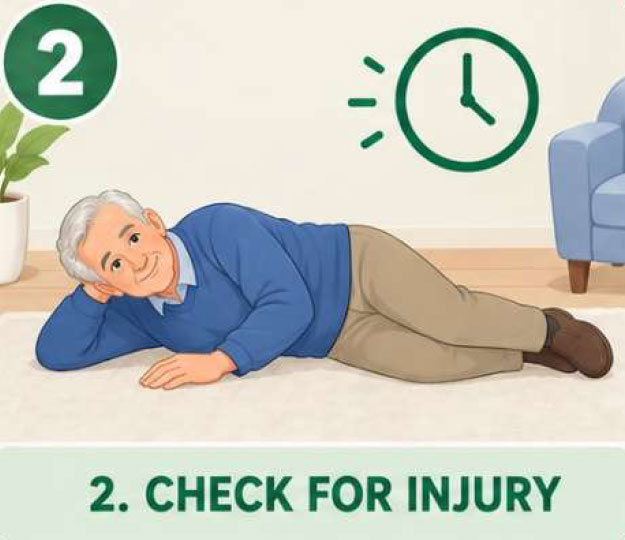
Check for signs of injury before moving you.
Not try to lift you manually if there is a suspected injury, or it is not safe to do so.
Arrange the appropriate help depending on the circumstances, which may include contacting emergency services, your GP, the office/on-call team or your nominated family member.
Use safe moving and handling techniques and equipment where appropriate and where they are trained to do so.
Record and report the fall, so your care team can review what may reduce the risk of another fall.
Your care plan
Your individual falls risk and support needs are considered as part of your care plan.
10. STAY IN TOUCH
Please tell us
Please Tell Us If
You have had a fall, or a near miss
You are feeling less steady on your feet
Your walking has changed
You are experiencing dizziness
You are struggling with stairs
Your walking aid or other equipment is no longer suitable
Something in your home is making it difficult for you to move around safely
The sooner we know, the sooner we can help - speak to your carer or coordinator
any time.
EMERGENCY • AMBULANCE / FIRE / GARDAÍ • 112 OR 999
Small steps can make a big difference. Stay active. Stay prepared. Stay safe.
Information reviewed against HSE falls-prevention guidance and provider information at time of writing. This booklet is general information and does not replace an individual clinical assessment, your care plan, or emergency advice.